More than nine in 10 independent repairers have highlighted that motorists are postponing essential vehicle repairs, according to a new survey from ClickMechanic.
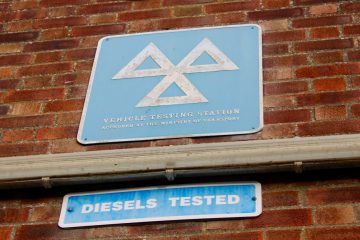
The study also saw 65% reporting that customers frequently requested only the minimum work needed to pass an MOT, as cost pressures bite and vehicle servicing becomes the easiest option to pass on.
Findings draw on responses from more than 200 independent repair businesses nationwide and highlight how these rising cost pressures and deferred maintenance are creating challenges for repairers, from diagnosing faults that customers are reluctant to address to managing vehicles with increasingly serious problems.
In total, 67% of ClickMechanic survey respondents said cost-driven repair delays had worsened over the previous 12 months. Warning-lights were the most commonly deferred jobs, cited by 64% of repairers, followed by engine repairs (42%), suspension components (39%), tyres (37%) and brakes (29%).
Ignorance leads to consequences
The consequences can be significant. According to 96% of repairers who responded to the ClickMechanic study, ignored dashboard warning lights led to minor faults developing into more serious mechanical failures. A total of 56% said they encountered this frequently, while the other 40% stated this was more of an occasional issue.
Some 83% of technicians said motorists justified ignoring warning lights because their vehicles still appeared to drive normally, while 39% reported that customers avoided diagnostic assessments because of the immediate cost.
“Motorists are facing tight household budgets, but gambling on critical safety components or driving with warning lights on is a false economy that almost always ends in severe mechanical failure and massive recovery bills,” Andrew Jervis, Co-founder and CEO of ClickMechanic.
“For a busy workshop, this delay culture ties up ramps with non-runners and forces technicians into difficult conversations over preventable damage.”
ClickMechanic finds confusion
The ClickMechanic survey also found widespread confusion among motorists about the distinction between an MOT test and ongoing vehicle maintenance.
Around 72% of technicians said they regularly encountered motorists who believed passing an MOT meant their vehicle required no further maintenance.
Meanwhile, 51% said customers thought MOT advisories could safely be ignored for another year, while 49% reported that motorists treated an MOT as interchangeable with a scheduled service.
The impact was evident in repeat workshop visits, with 89% of respondents saying customers routinely returned 12 months later with an unaddressed advisory that had deteriorated into a major component failure or an MOT failure.
Jarvis added that repairers had an important role to play in helping motorists understand the implications of delaying maintenance.
“These findings underline just how vital it is that we clearly communicate the basics of vehicle health and road safety. To those of us working in the trade, the distinction between an annual MOT, routine servicing and vehicle diagnostics is second nature. But we can’t assume motorists share that understanding.
“As an industry, it’s up to us to guide customers through the real-world implications of deferred maintenance, helping them recognise that catching a fault early protects both their safety and their wallet. In short, we need to ensure they understand the value of the services we’re providing.”