
The UK saw another quarter of modest used car growth between July and September, with a 0.5% increase. Yet despite this, the period still provided the best third-quarter result since 2021.
Data from the SMMT shows that in the three-month period, 2,030,619 units changed hands. Following a 0.2% decline in the first quarter, the market bounced back in the second, with a 0.7% rise.
The slim margin between July and September suggests the country’s used-car market is slowing, represented by a 0.3% rise after nine months of 2026. In total, 6,056,169 transactions have taken place in the period.
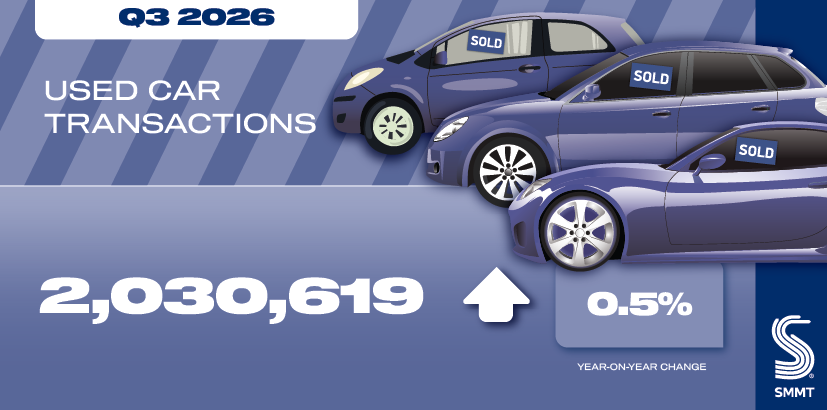
July was the strongest month of the quarter in terms of volume. In total, 697,629 transactions took place, a 0.6% rise year over year. August experienced a 1.2% improvement, with 686,835 units changing hands. September was the weakest of the three-month period, with 646,155 sales representing a 0.4% decline.
The slowdown could be attributed to increasing costs of motoring, meaning buying a used car is not a priority for many drivers. This could, in turn, lead to a further increase in the age of the UK car parc. This would also be good news for workshops, with a greater demand on servicing and repairing older models as components wear.
Petrol leads as BEVs gain
According to the SMMT, petrol dominated the used-car market again in the third quarter. With a 56.6% share of the market, it recorded 1,148,576 sales, just 271 units fewer than last year.
Diesel saw a 5.3% decline to 623,354 transactions and a 30.7% share. This means non-electrified vehicles made up 87.3% of all used cars sold, meaning almost nine in 10 transactions were from internal combustion engines.
Full hybrids (HEVs) saw the strongest improvement in the quarter, up 25.9% to 135,203 units. However, PHEV transactions dropped sharply, with 20,911 sales, down 13.3% year over year. The powertrain is performing well in the UK’s new-car market. However, lower sales in previous years may now be restricting used-car supply.
Demand for BEVs also spiked between July and September. In total, 97,625 all-electric cars changed hands, a 23.2% increase.
Changes in used car supply
The results mean that after nine months of 2026, petrol is still the dominant fuel-type, with 3,417,515 transactions. This volume equated to a 56.4% hold of the overall used-car market. With diesel taking 30.9%, ICE models have a commanding lead over electrified vehicles. HEVs, PHEVs and BEVs only managed a combined 12.4% share between January and September.
The SMMT said rising new-BEV sales are increasing used-car supply. This is making lower-priced all-electric models more accessible to drivers.
“Long-term investment in new models is broadening choice for used car buyers, while growth in new EVs is driving a surge in second-hand uptake,” commented SMMT Chief Executive Mike Hawes.
“To sustain this progress and make zero-emission mobility possible for all motorists, the new car market must remain strong. It must also be underpinned by measures that boost EV demand, including affordable and widely accessible charging infrastructure and compelling fiscal incentives.”
Ford Fiesta tops the table
Despite production ending in 2023, the Ford Fiesta was once again the UK’s best-selling used car. This continued a streak that has lasted over a decade.
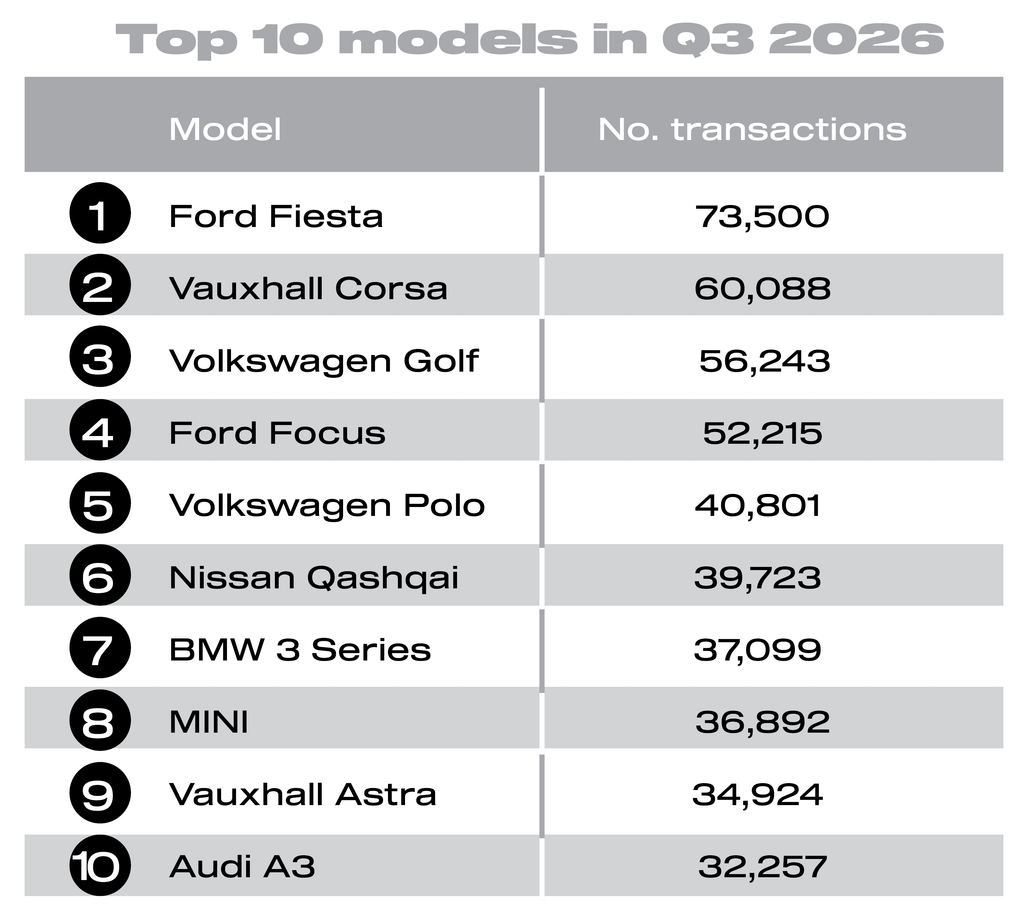
With no new Fiestas being built, it is safe to say that the country’s most popular car is also aging rapidly. With production ending in July 2023, the last models sold will now be of MOT age, meaning they are more likely to come through independent channels.
With 73,500 Fiestas changing hands, the model was well above the second-placed Vauxhall Corsa, which saw 60,088 sales over the three-month period. The Volkswagen Golf was next, with 56,243 transactions, according to the SMMT. This was closely followed by the Ford Focus, another discontinued model, with 52,215 used car sales.



You must be logged in to post a comment.